What Are The 6 Lobes Of The Brain
The human brain is a complex organ, made up of several distinct parts, each responsible for different functions. The cerebrum, the largest part, is responsible for sensory interpretation, thought processing, and voluntary muscle activity. Beneath it is the cerebellum, which controls balance and coordination. The brainstem connects the brain to the spinal cord and oversees automatic processes.
Lobes of the Brain The four lobes of the brain are regions of the cerebrum that serve different functions: Frontal Lobe Location: This is the anterior or front part of the brain. Functions: Decision making, problem solving, control of purposeful behaviors, consciousness, and emotions. Parietal Lobe Location: Sits behind the frontal lobe.
Frontal Lobe: Anatomy: The frontal lobes are located directly behind the forehead, and they are the largest lobes in the human brain. Located in the frontal lobe is Broca's area, which controls the muscles in the mouth used for speech.
The brain's cerebral cortex is the outermost layer that gives the brain its characteristic wrinkly appearance. The cerebral cortex is divided lengthways into two cerebral hemispheres connected by the corpus callosum. Traditionally, each of the hemispheres has been divided into four lobes: frontal, parietal, temporal and occipital. (Wikimedia) Although we now know that most brain functions.

Figure 1. The brain and its parts can be divided into three main categories: the forebrain, midbrain, and hindbrain. Lobes of the Brain The four lobes of the brain are the frontal, parietal, temporal, and occipital lobes (Figure 2). The frontal lobe is located in the forward part of the brain, extending back to a fissure known as the central.
Lobes of the Brain The four lobes of the brain are regions of the cerebrum that serve different functions: Frontal Lobe Location: This is the anterior or front part of the brain. Functions: Decision making, problem solving, control of purposeful behaviors, consciousness, and emotions. Parietal Lobe Location: Sits behind the frontal lobe.
Learn the functions of brain parts like frontal, parietal, temporal, cerebellum, and brain stem with visual aids and NEET.
6 Major Parts of the Brain and What They Do I always like to say that teachers are brain changers. They work every day to change their students' brains. If that is the case then it would be logical to conclude that the more teachers knows about the brain, the better equipped they will be to change their students' brains. This post looks at six parts of the brain and what they do. 1. Lobes.
The Lobes Of Brain Vector Human Brain Structure Diagram Brain Function Infographic Stock ...

The human brain is a complex organ, made up of several distinct parts, each responsible for different functions. The cerebrum, the largest part, is responsible for sensory interpretation, thought processing, and voluntary muscle activity. Beneath it is the cerebellum, which controls balance and coordination. The brainstem connects the brain to the spinal cord and oversees automatic processes.
The brain's cerebral cortex is the outermost layer that gives the brain its characteristic wrinkly appearance. The cerebral cortex is divided lengthways into two cerebral hemispheres connected by the corpus callosum. Traditionally, each of the hemispheres has been divided into four lobes: frontal, parietal, temporal and occipital. (Wikimedia) Although we now know that most brain functions.
Frontal Lobe: Anatomy: The frontal lobes are located directly behind the forehead, and they are the largest lobes in the human brain. Located in the frontal lobe is Broca's area, which controls the muscles in the mouth used for speech.
Learn the functions of brain parts like frontal, parietal, temporal, cerebellum, and brain stem with visual aids and NEET.
Brain Diagram Lobes

The human brain is a complex organ, made up of several distinct parts, each responsible for different functions. The cerebrum, the largest part, is responsible for sensory interpretation, thought processing, and voluntary muscle activity. Beneath it is the cerebellum, which controls balance and coordination. The brainstem connects the brain to the spinal cord and oversees automatic processes.
6 Major Parts of the Brain and What They Do I always like to say that teachers are brain changers. They work every day to change their students' brains. If that is the case then it would be logical to conclude that the more teachers knows about the brain, the better equipped they will be to change their students' brains. This post looks at six parts of the brain and what they do. 1. Lobes.
Frontal Lobe: Anatomy: The frontal lobes are located directly behind the forehead, and they are the largest lobes in the human brain. Located in the frontal lobe is Broca's area, which controls the muscles in the mouth used for speech.
The six lobes of the brain are the frontal lobe, the Parietal lobe, the Temporal lobe, the Occipital lobe, the Insular lobe & Limbic lobe. In this article, we will discuss the lobes of the brain in detail, with their location and functions. 4 Lobes of the Brain Diagram Visual guide to the four main lobes of the human brain and their primary.
Brain Lobes Labeled Mri At Harold Cook Blog
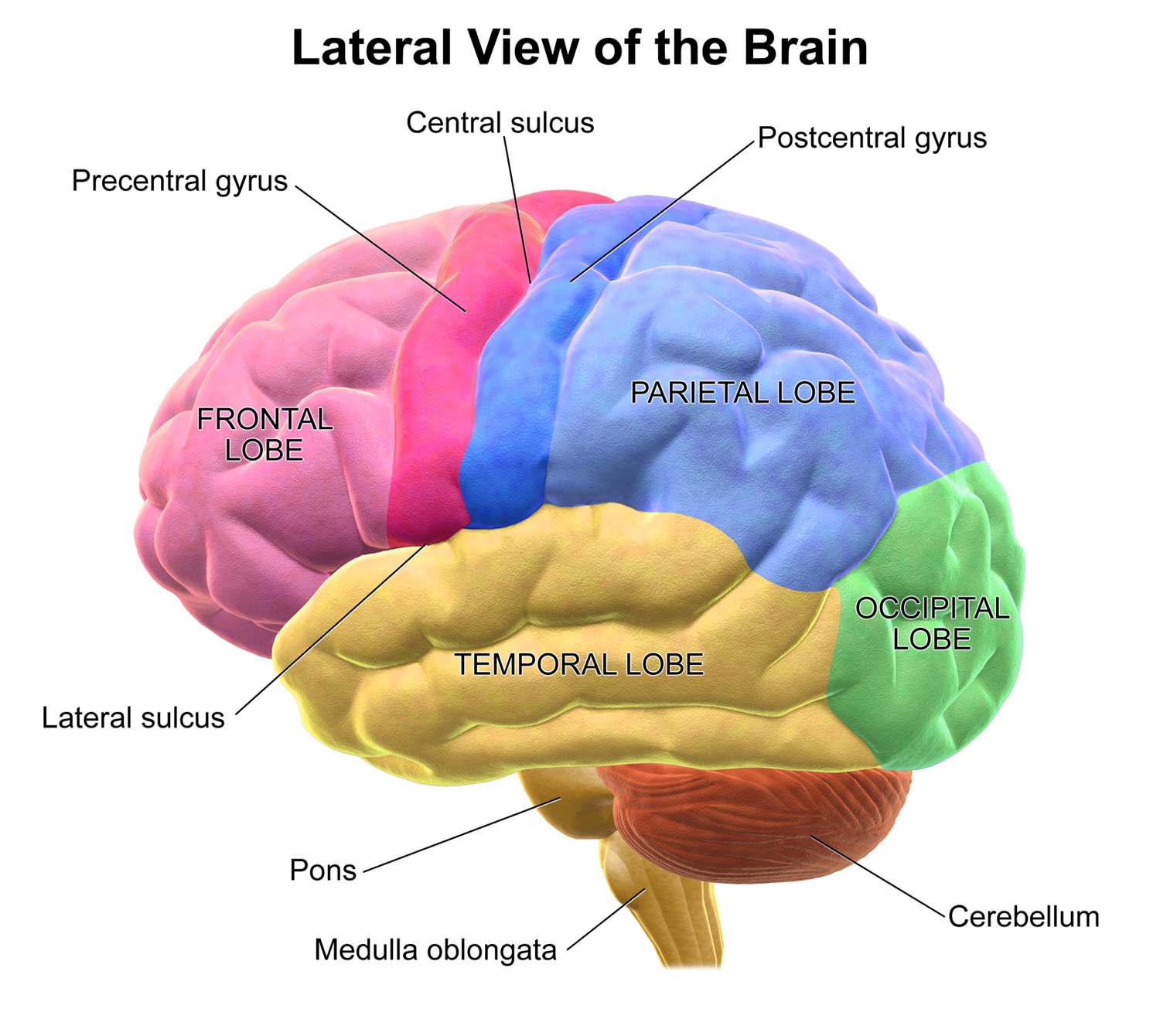
The lobes of the brain are the four major identifiable regions of the human cerebral cortex, and they comprise the surface of each hemisphere of the cerebrum. [1] The two hemispheres are roughly symmetrical in structure, and are connected by the corpus callosum. Some sources include the insula and limbic lobe but the limbic lobe incorporates parts of the other lobes. The lobes are large areas.
Learn the functions of brain parts like frontal, parietal, temporal, cerebellum, and brain stem with visual aids and NEET.
The brain's cerebral cortex is the outermost layer that gives the brain its characteristic wrinkly appearance. The cerebral cortex is divided lengthways into two cerebral hemispheres connected by the corpus callosum. Traditionally, each of the hemispheres has been divided into four lobes: frontal, parietal, temporal and occipital. (Wikimedia) Although we now know that most brain functions.
Frontal Lobe: Anatomy: The frontal lobes are located directly behind the forehead, and they are the largest lobes in the human brain. Located in the frontal lobe is Broca's area, which controls the muscles in the mouth used for speech.
Lobes Of The Brain: MedlinePlus Medical Encyclopedia Image
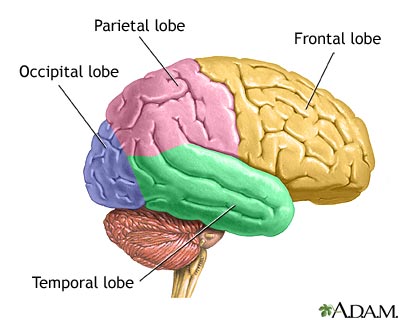
Lobes of the Brain The four lobes of the brain are regions of the cerebrum that serve different functions: Frontal Lobe Location: This is the anterior or front part of the brain. Functions: Decision making, problem solving, control of purposeful behaviors, consciousness, and emotions. Parietal Lobe Location: Sits behind the frontal lobe.
Learn the functions of brain parts like frontal, parietal, temporal, cerebellum, and brain stem with visual aids and NEET.
6 Major Parts of the Brain and What They Do I always like to say that teachers are brain changers. They work every day to change their students' brains. If that is the case then it would be logical to conclude that the more teachers knows about the brain, the better equipped they will be to change their students' brains. This post looks at six parts of the brain and what they do. 1. Lobes.
Frontal Lobe: Anatomy: The frontal lobes are located directly behind the forehead, and they are the largest lobes in the human brain. Located in the frontal lobe is Broca's area, which controls the muscles in the mouth used for speech.
Brain Diagrams From Lobes To Functions Parts Of The Brain Lo
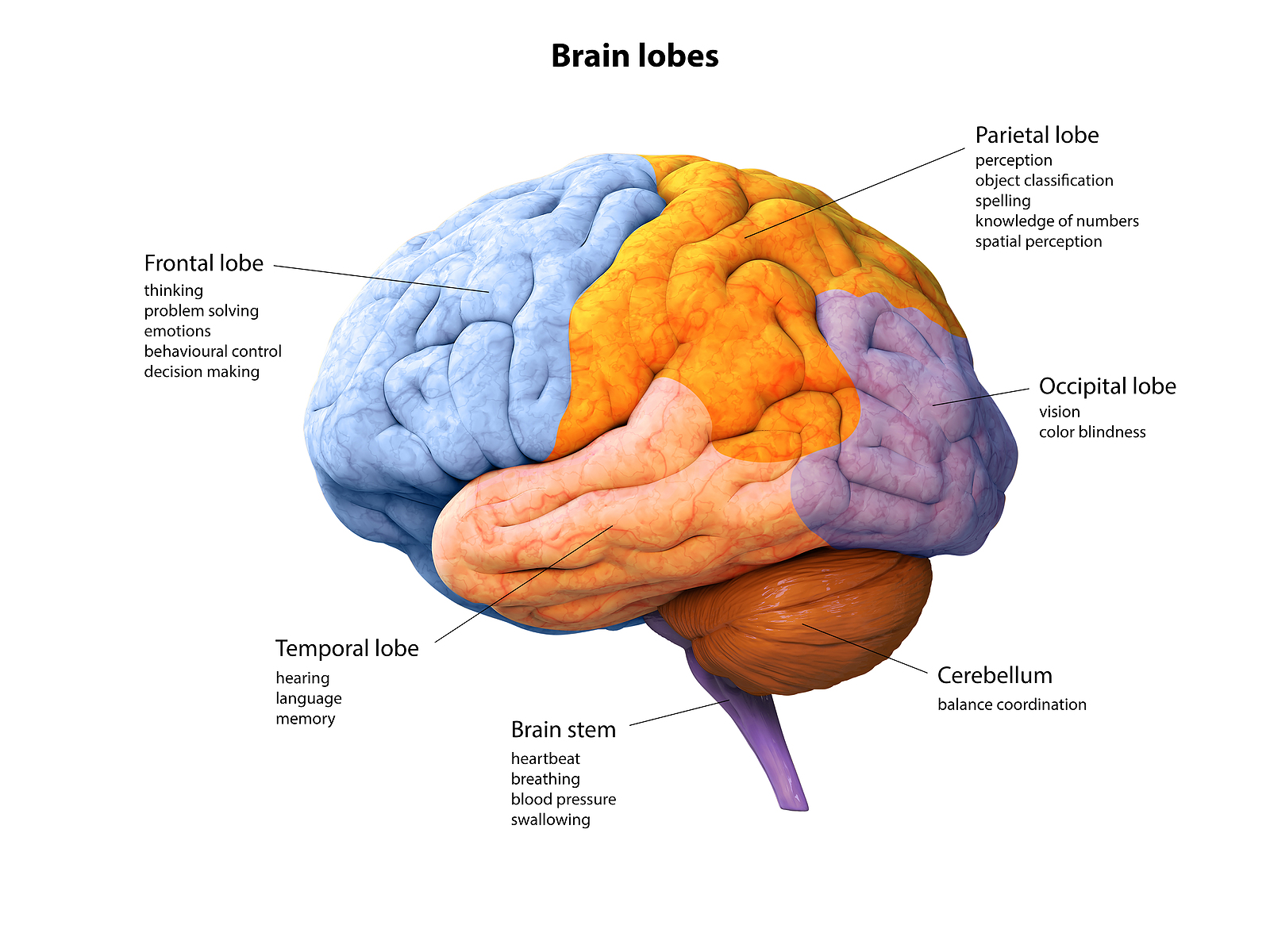
The human brain is a complex organ, made up of several distinct parts, each responsible for different functions. The cerebrum, the largest part, is responsible for sensory interpretation, thought processing, and voluntary muscle activity. Beneath it is the cerebellum, which controls balance and coordination. The brainstem connects the brain to the spinal cord and oversees automatic processes.
The 6 lobes of the brain include the frontal, parietal, temporal, occipital, insular and limbic lobes. Learn about their structure and function at Kenhub!
The six lobes of the brain are the frontal lobe, the Parietal lobe, the Temporal lobe, the Occipital lobe, the Insular lobe & Limbic lobe. In this article, we will discuss the lobes of the brain in detail, with their location and functions. 4 Lobes of the Brain Diagram Visual guide to the four main lobes of the human brain and their primary.
Figure 1. The brain and its parts can be divided into three main categories: the forebrain, midbrain, and hindbrain. Lobes of the Brain The four lobes of the brain are the frontal, parietal, temporal, and occipital lobes (Figure 2). The frontal lobe is located in the forward part of the brain, extending back to a fissure known as the central.
Forebrain: Anatomy, Functions & FAQs
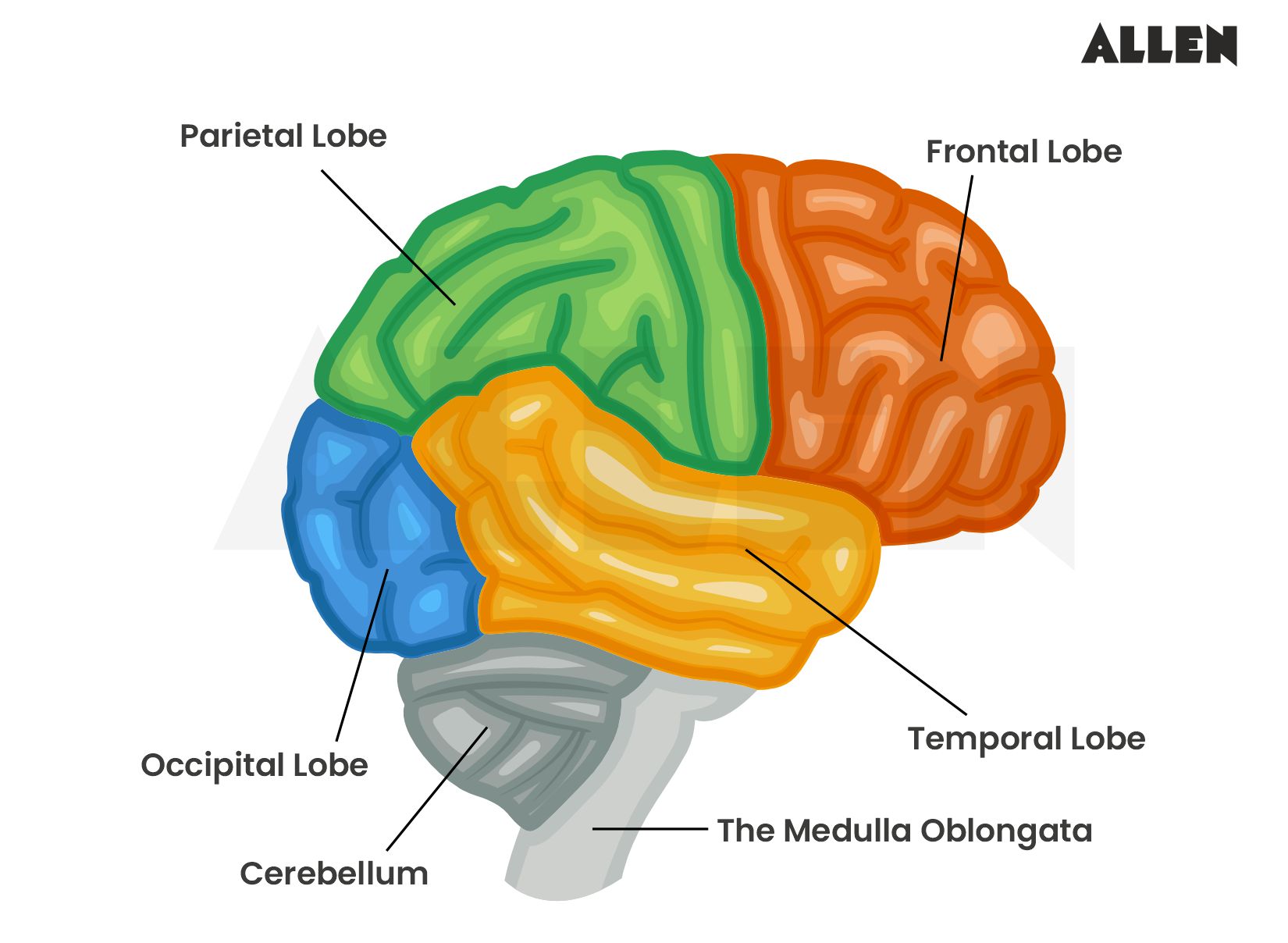
6 Major Parts of the Brain and What They Do I always like to say that teachers are brain changers. They work every day to change their students' brains. If that is the case then it would be logical to conclude that the more teachers knows about the brain, the better equipped they will be to change their students' brains. This post looks at six parts of the brain and what they do. 1. Lobes.
Figure 1. The brain and its parts can be divided into three main categories: the forebrain, midbrain, and hindbrain. Lobes of the Brain The four lobes of the brain are the frontal, parietal, temporal, and occipital lobes (Figure 2). The frontal lobe is located in the forward part of the brain, extending back to a fissure known as the central.
Learn the functions of brain parts like frontal, parietal, temporal, cerebellum, and brain stem with visual aids and NEET.
The brain's cerebral cortex is the outermost layer that gives the brain its characteristic wrinkly appearance. The cerebral cortex is divided lengthways into two cerebral hemispheres connected by the corpus callosum. Traditionally, each of the hemispheres has been divided into four lobes: frontal, parietal, temporal and occipital. (Wikimedia) Although we now know that most brain functions.
Brain Lobes Diagram Labeled With Function Brain Lobes Diagra

The 6 lobes of the brain include the frontal, parietal, temporal, occipital, insular and limbic lobes. Learn about their structure and function at Kenhub!
Learn the functions of brain parts like frontal, parietal, temporal, cerebellum, and brain stem with visual aids and NEET.
Frontal Lobe: Anatomy: The frontal lobes are located directly behind the forehead, and they are the largest lobes in the human brain. Located in the frontal lobe is Broca's area, which controls the muscles in the mouth used for speech.
The human brain is a complex organ, made up of several distinct parts, each responsible for different functions. The cerebrum, the largest part, is responsible for sensory interpretation, thought processing, and voluntary muscle activity. Beneath it is the cerebellum, which controls balance and coordination. The brainstem connects the brain to the spinal cord and oversees automatic processes.
Parts Of The Brain Lobes
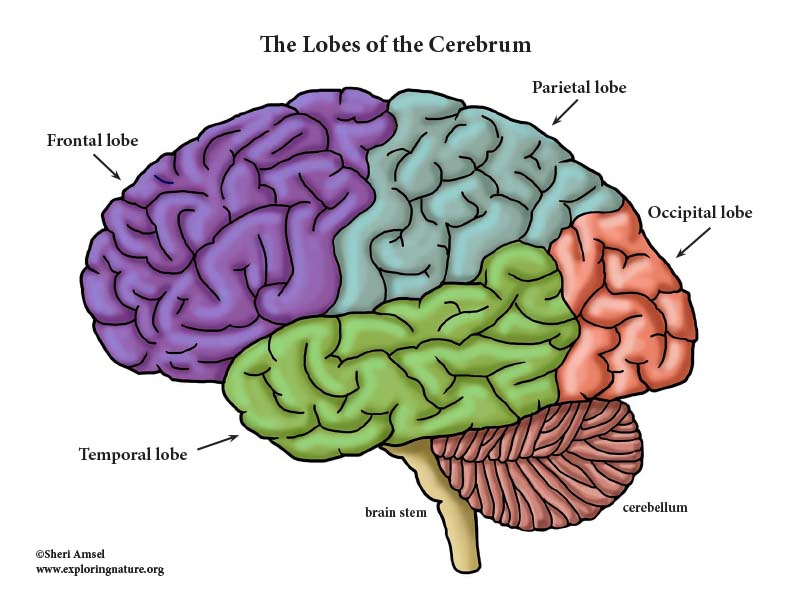
Figure 1. The brain and its parts can be divided into three main categories: the forebrain, midbrain, and hindbrain. Lobes of the Brain The four lobes of the brain are the frontal, parietal, temporal, and occipital lobes (Figure 2). The frontal lobe is located in the forward part of the brain, extending back to a fissure known as the central.
The lobes of the brain are the four major identifiable regions of the human cerebral cortex, and they comprise the surface of each hemisphere of the cerebrum. [1] The two hemispheres are roughly symmetrical in structure, and are connected by the corpus callosum. Some sources include the insula and limbic lobe but the limbic lobe incorporates parts of the other lobes. The lobes are large areas.
Learn the functions of brain parts like frontal, parietal, temporal, cerebellum, and brain stem with visual aids and NEET.
The human brain is a complex organ, made up of several distinct parts, each responsible for different functions. The cerebrum, the largest part, is responsible for sensory interpretation, thought processing, and voluntary muscle activity. Beneath it is the cerebellum, which controls balance and coordination. The brainstem connects the brain to the spinal cord and oversees automatic processes.
Lobes Of The Brain - Queensland Brain Institute - University Of Queensland
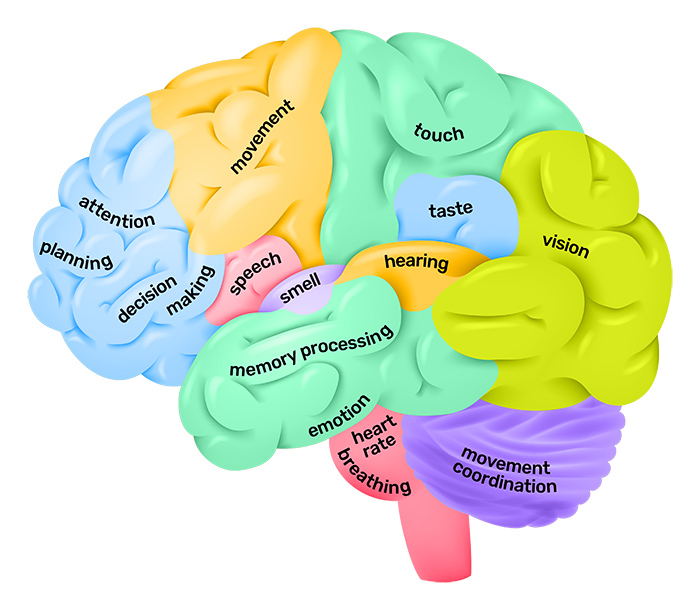
6 Major Parts of the Brain and What They Do I always like to say that teachers are brain changers. They work every day to change their students' brains. If that is the case then it would be logical to conclude that the more teachers knows about the brain, the better equipped they will be to change their students' brains. This post looks at six parts of the brain and what they do. 1. Lobes.
The lobes of the brain are the four major identifiable regions of the human cerebral cortex, and they comprise the surface of each hemisphere of the cerebrum. [1] The two hemispheres are roughly symmetrical in structure, and are connected by the corpus callosum. Some sources include the insula and limbic lobe but the limbic lobe incorporates parts of the other lobes. The lobes are large areas.
The brain's cerebral cortex is the outermost layer that gives the brain its characteristic wrinkly appearance. The cerebral cortex is divided lengthways into two cerebral hemispheres connected by the corpus callosum. Traditionally, each of the hemispheres has been divided into four lobes: frontal, parietal, temporal and occipital. (Wikimedia) Although we now know that most brain functions.
The human brain is a complex organ, made up of several distinct parts, each responsible for different functions. The cerebrum, the largest part, is responsible for sensory interpretation, thought processing, and voluntary muscle activity. Beneath it is the cerebellum, which controls balance and coordination. The brainstem connects the brain to the spinal cord and oversees automatic processes.
The Brain And Spinal Cord - Understanding - Macmillan Cancer Support
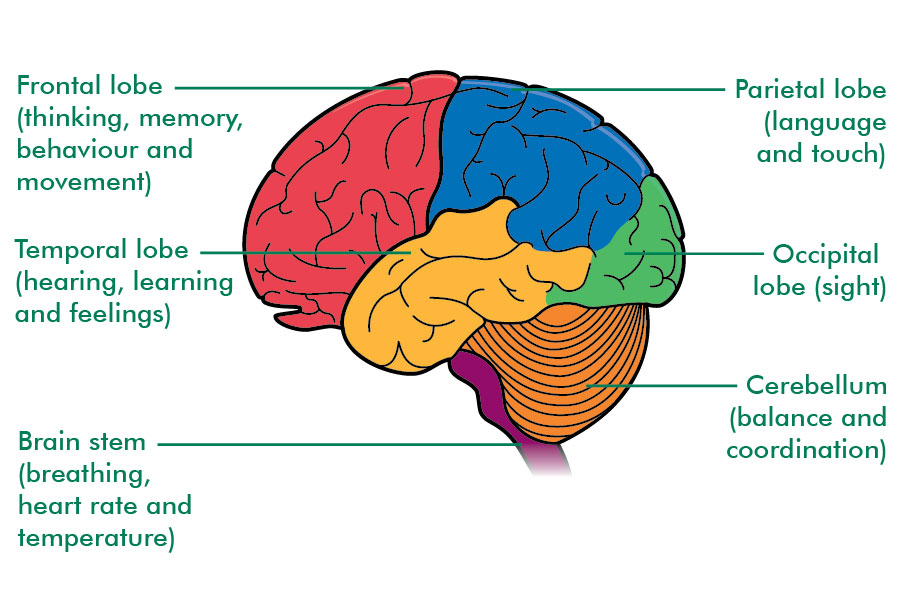
Learn the functions of brain parts like frontal, parietal, temporal, cerebellum, and brain stem with visual aids and NEET.
Figure 1. The brain and its parts can be divided into three main categories: the forebrain, midbrain, and hindbrain. Lobes of the Brain The four lobes of the brain are the frontal, parietal, temporal, and occipital lobes (Figure 2). The frontal lobe is located in the forward part of the brain, extending back to a fissure known as the central.
The lobes of the brain are the four major identifiable regions of the human cerebral cortex, and they comprise the surface of each hemisphere of the cerebrum. [1] The two hemispheres are roughly symmetrical in structure, and are connected by the corpus callosum. Some sources include the insula and limbic lobe but the limbic lobe incorporates parts of the other lobes. The lobes are large areas.
The six lobes of the brain are the frontal lobe, the Parietal lobe, the Temporal lobe, the Occipital lobe, the Insular lobe & Limbic lobe. In this article, we will discuss the lobes of the brain in detail, with their location and functions. 4 Lobes of the Brain Diagram Visual guide to the four main lobes of the human brain and their primary.
Lobes Of The Brain: Complete Guide With Functions & Diagram

Lobes of the Brain The four lobes of the brain are regions of the cerebrum that serve different functions: Frontal Lobe Location: This is the anterior or front part of the brain. Functions: Decision making, problem solving, control of purposeful behaviors, consciousness, and emotions. Parietal Lobe Location: Sits behind the frontal lobe.
6 Major Parts of the Brain and What They Do I always like to say that teachers are brain changers. They work every day to change their students' brains. If that is the case then it would be logical to conclude that the more teachers knows about the brain, the better equipped they will be to change their students' brains. This post looks at six parts of the brain and what they do. 1. Lobes.
The 6 lobes of the brain include the frontal, parietal, temporal, occipital, insular and limbic lobes. Learn about their structure and function at Kenhub!
Learn the functions of brain parts like frontal, parietal, temporal, cerebellum, and brain stem with visual aids and NEET.
Lobes Of The Brain: Structures, Positions And Functions
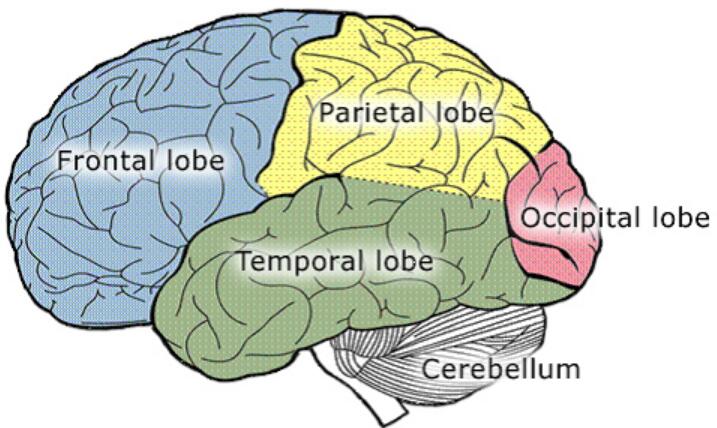
The 6 lobes of the brain include the frontal, parietal, temporal, occipital, insular and limbic lobes. Learn about their structure and function at Kenhub!
The six lobes of the brain are the frontal lobe, the Parietal lobe, the Temporal lobe, the Occipital lobe, the Insular lobe & Limbic lobe. In this article, we will discuss the lobes of the brain in detail, with their location and functions. 4 Lobes of the Brain Diagram Visual guide to the four main lobes of the human brain and their primary.
Figure 1. The brain and its parts can be divided into three main categories: the forebrain, midbrain, and hindbrain. Lobes of the Brain The four lobes of the brain are the frontal, parietal, temporal, and occipital lobes (Figure 2). The frontal lobe is located in the forward part of the brain, extending back to a fissure known as the central.
The lobes of the brain are the four major identifiable regions of the human cerebral cortex, and they comprise the surface of each hemisphere of the cerebrum. [1] The two hemispheres are roughly symmetrical in structure, and are connected by the corpus callosum. Some sources include the insula and limbic lobe but the limbic lobe incorporates parts of the other lobes. The lobes are large areas.
Lobes Of The Brain Stock Photo - Alamy
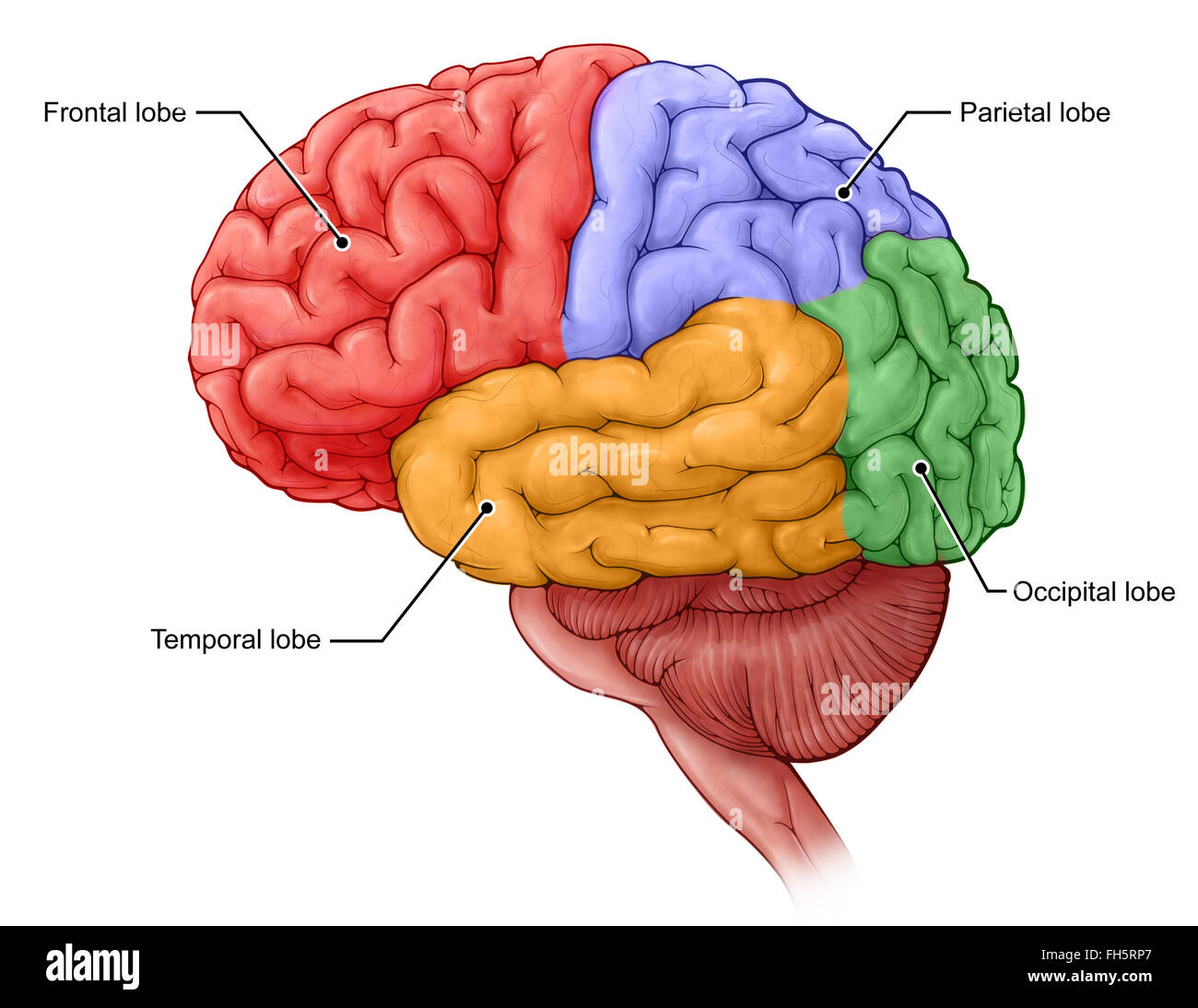
The brain's cerebral cortex is the outermost layer that gives the brain its characteristic wrinkly appearance. The cerebral cortex is divided lengthways into two cerebral hemispheres connected by the corpus callosum. Traditionally, each of the hemispheres has been divided into four lobes: frontal, parietal, temporal and occipital. (Wikimedia) Although we now know that most brain functions.
Frontal Lobe: Anatomy: The frontal lobes are located directly behind the forehead, and they are the largest lobes in the human brain. Located in the frontal lobe is Broca's area, which controls the muscles in the mouth used for speech.
Figure 1. The brain and its parts can be divided into three main categories: the forebrain, midbrain, and hindbrain. Lobes of the Brain The four lobes of the brain are the frontal, parietal, temporal, and occipital lobes (Figure 2). The frontal lobe is located in the forward part of the brain, extending back to a fissure known as the central.
The lobes of the brain are the four major identifiable regions of the human cerebral cortex, and they comprise the surface of each hemisphere of the cerebrum. [1] The two hemispheres are roughly symmetrical in structure, and are connected by the corpus callosum. Some sources include the insula and limbic lobe but the limbic lobe incorporates parts of the other lobes. The lobes are large areas.
Brain Labeled Diagram The Main Divisions Of The Brain And, 49% OFF
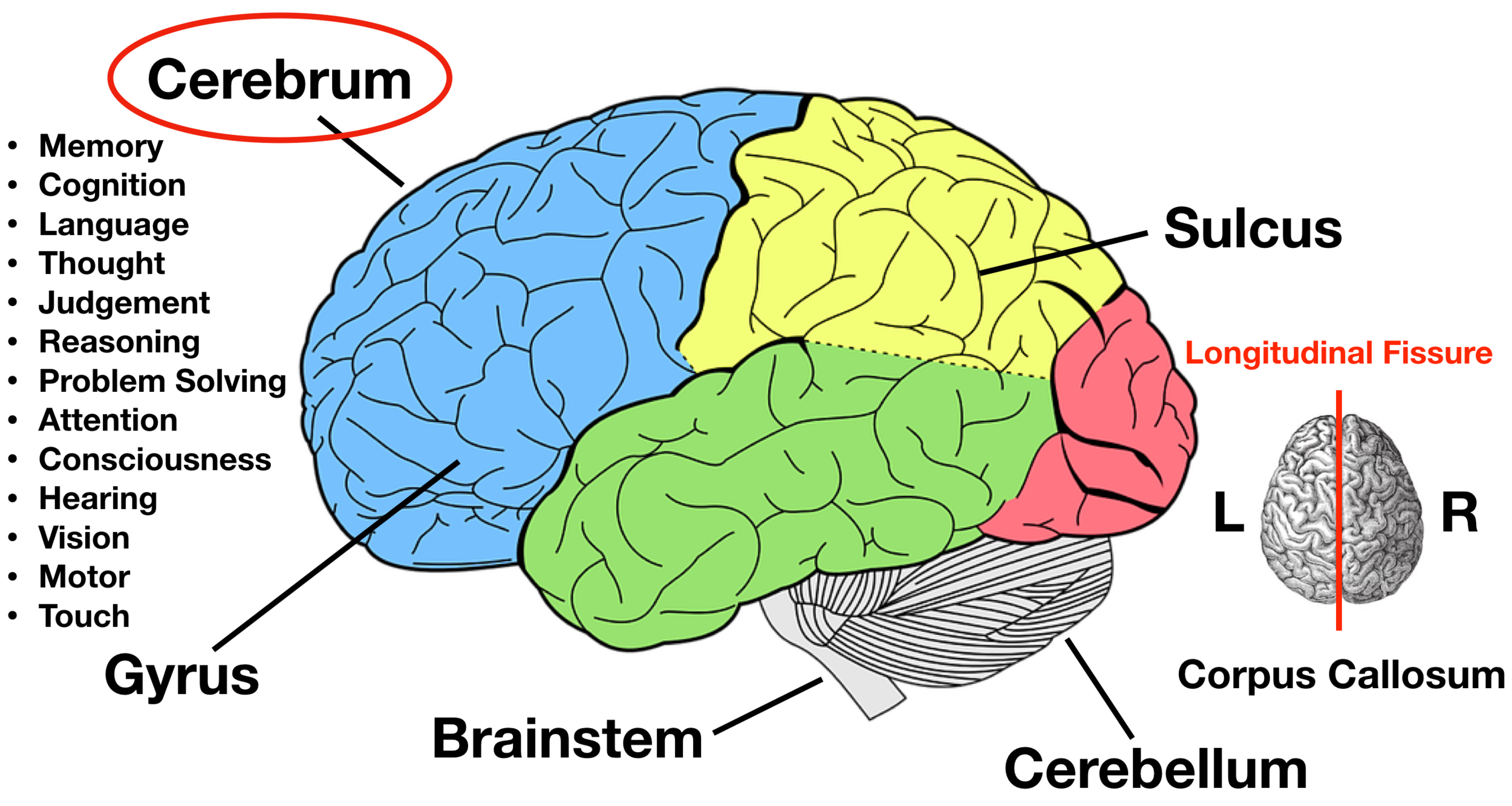
Lobes of the Brain The four lobes of the brain are regions of the cerebrum that serve different functions: Frontal Lobe Location: This is the anterior or front part of the brain. Functions: Decision making, problem solving, control of purposeful behaviors, consciousness, and emotions. Parietal Lobe Location: Sits behind the frontal lobe.
The brain's cerebral cortex is the outermost layer that gives the brain its characteristic wrinkly appearance. The cerebral cortex is divided lengthways into two cerebral hemispheres connected by the corpus callosum. Traditionally, each of the hemispheres has been divided into four lobes: frontal, parietal, temporal and occipital. (Wikimedia) Although we now know that most brain functions.
Learn the functions of brain parts like frontal, parietal, temporal, cerebellum, and brain stem with visual aids and NEET.
6 Major Parts of the Brain and What They Do I always like to say that teachers are brain changers. They work every day to change their students' brains. If that is the case then it would be logical to conclude that the more teachers knows about the brain, the better equipped they will be to change their students' brains. This post looks at six parts of the brain and what they do. 1. Lobes.
6 Major Parts of the Brain and What They Do I always like to say that teachers are brain changers. They work every day to change their students' brains. If that is the case then it would be logical to conclude that the more teachers knows about the brain, the better equipped they will be to change their students' brains. This post looks at six parts of the brain and what they do. 1. Lobes.
Figure 1. The brain and its parts can be divided into three main categories: the forebrain, midbrain, and hindbrain. Lobes of the Brain The four lobes of the brain are the frontal, parietal, temporal, and occipital lobes (Figure 2). The frontal lobe is located in the forward part of the brain, extending back to a fissure known as the central.
The brain's cerebral cortex is the outermost layer that gives the brain its characteristic wrinkly appearance. The cerebral cortex is divided lengthways into two cerebral hemispheres connected by the corpus callosum. Traditionally, each of the hemispheres has been divided into four lobes: frontal, parietal, temporal and occipital. (Wikimedia) Although we now know that most brain functions.
The lobes of the brain are the four major identifiable regions of the human cerebral cortex, and they comprise the surface of each hemisphere of the cerebrum. [1] The two hemispheres are roughly symmetrical in structure, and are connected by the corpus callosum. Some sources include the insula and limbic lobe but the limbic lobe incorporates parts of the other lobes. The lobes are large areas.
Frontal Lobe: Anatomy: The frontal lobes are located directly behind the forehead, and they are the largest lobes in the human brain. Located in the frontal lobe is Broca's area, which controls the muscles in the mouth used for speech.
Lobes of the Brain The four lobes of the brain are regions of the cerebrum that serve different functions: Frontal Lobe Location: This is the anterior or front part of the brain. Functions: Decision making, problem solving, control of purposeful behaviors, consciousness, and emotions. Parietal Lobe Location: Sits behind the frontal lobe.
The six lobes of the brain are the frontal lobe, the Parietal lobe, the Temporal lobe, the Occipital lobe, the Insular lobe & Limbic lobe. In this article, we will discuss the lobes of the brain in detail, with their location and functions. 4 Lobes of the Brain Diagram Visual guide to the four main lobes of the human brain and their primary.
The 6 lobes of the brain include the frontal, parietal, temporal, occipital, insular and limbic lobes. Learn about their structure and function at Kenhub!
The human brain is a complex organ, made up of several distinct parts, each responsible for different functions. The cerebrum, the largest part, is responsible for sensory interpretation, thought processing, and voluntary muscle activity. Beneath it is the cerebellum, which controls balance and coordination. The brainstem connects the brain to the spinal cord and oversees automatic processes.
Learn the functions of brain parts like frontal, parietal, temporal, cerebellum, and brain stem with visual aids and NEET.